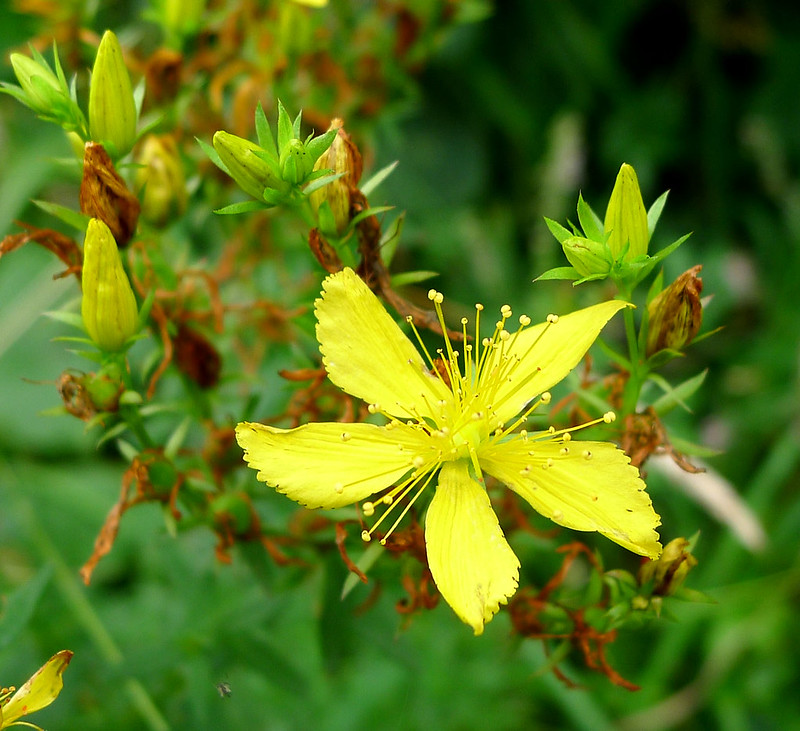
This light-filled clearing provides the opportunity for the ground flora to become more diverse and better developed. Here impressive grasses such as Crested dogs-tail and Sweet vernal grasses are surrounded by splashes of colour with Red and White clover, St John’s wort, Birdsfoot trefoil, Cat’s ear and Tormentil.
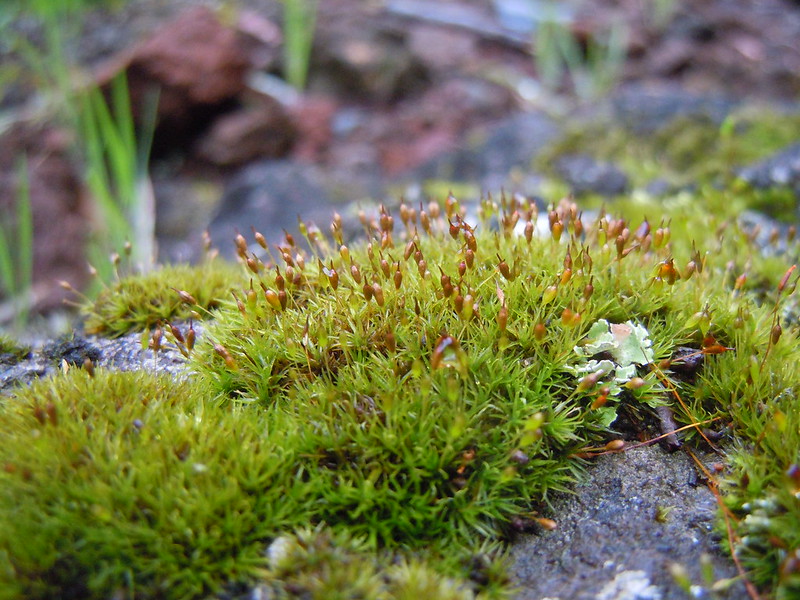
Bryophytes make for a soft footstep in the clearing.
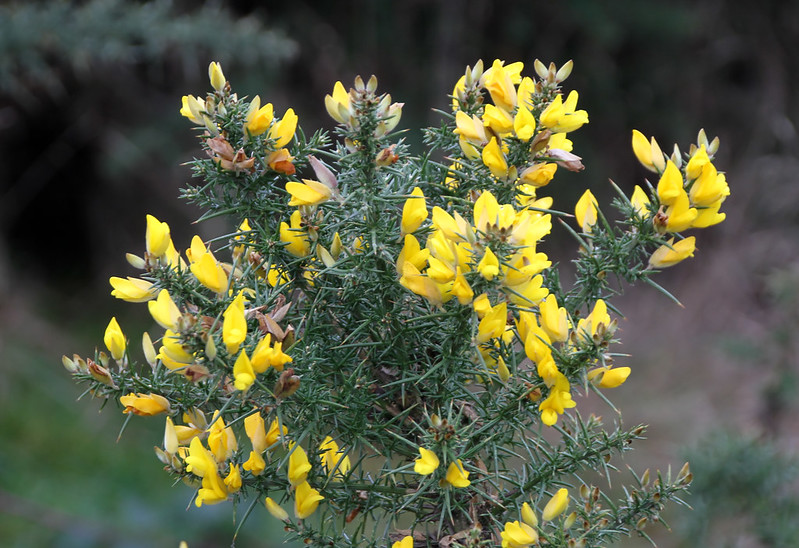
Gorse, Bramble and Heather are slowly beginning to recolonise the clearing. The nearby bank contains a range of heath species including Bilberry, Bell heather, Heath speedwell and Hard fern.
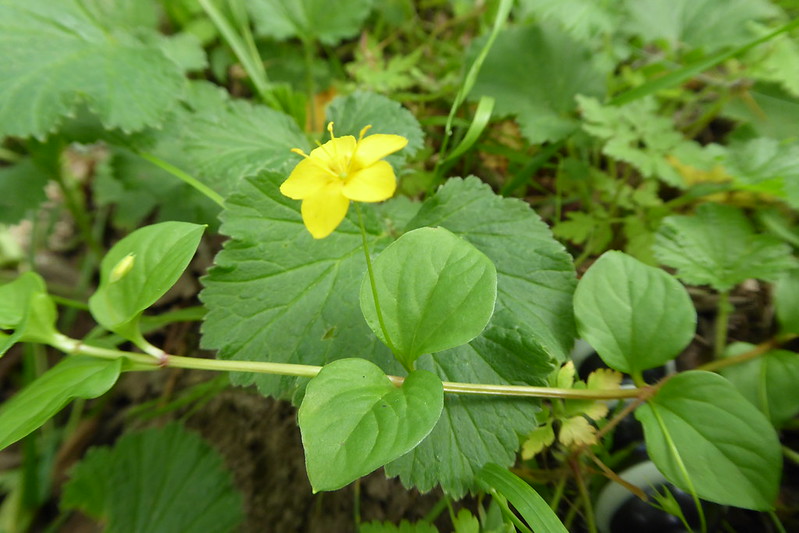
This heath vegetation provides a clue about what the habitats in the surrounding landscape may have looked like prior to the establishment of the forest in the 1930s. The delicate Yellow pimpernel creeps over the disturbed ground below the bank.
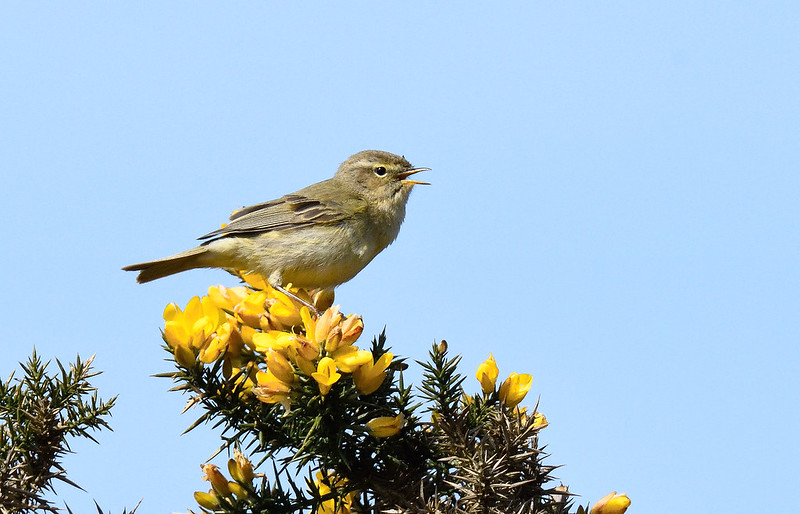
Stop at the clearing and listen to the bird song. In the summertime, the chiff-chaff sings its name loudly and repetitively from the nearby Rowan, Willow and conifer trees, ‘Chiff-chaff, Chiff-chaff, Chiff-chaff ‘.
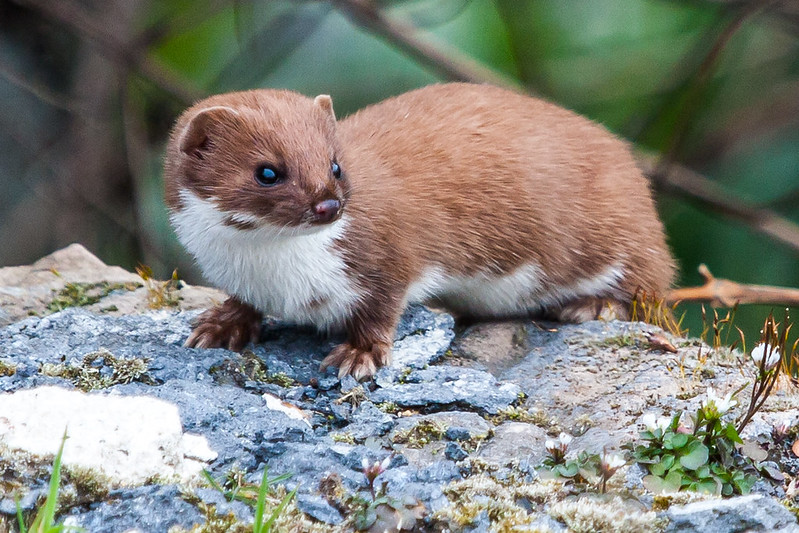
Keep your eyes peeled for Irish stoat which has been previously seen around this area.