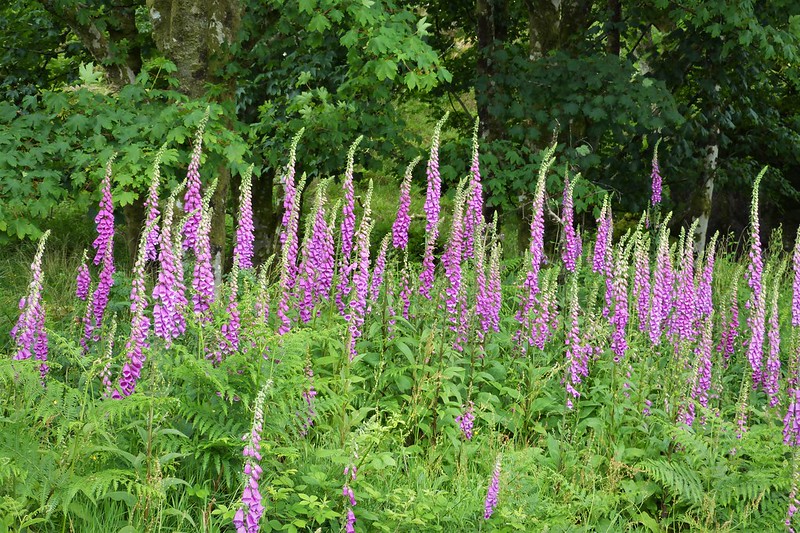
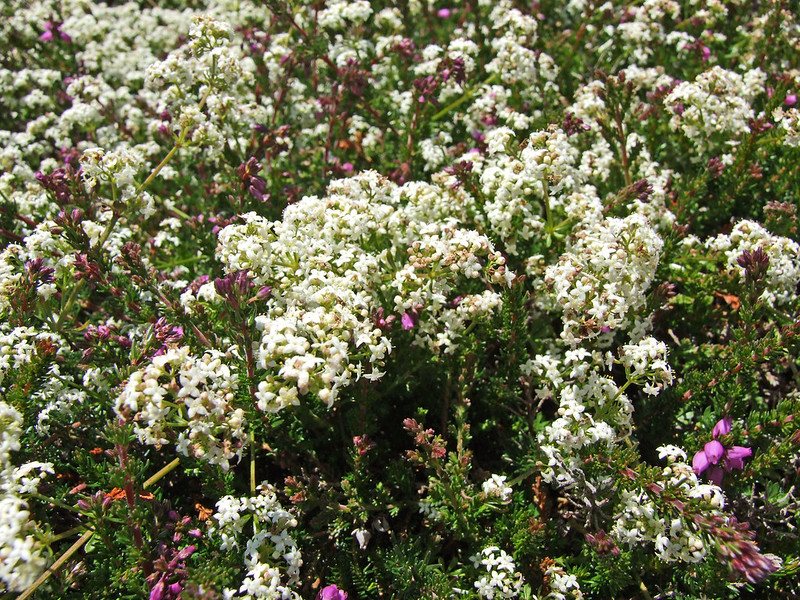
On the track between Stop 4 and 5, the margins are lined with Foxgloves and delicate drifts of Heath bedstraw. Sweet vernal grass heads blow gently in the breeze.
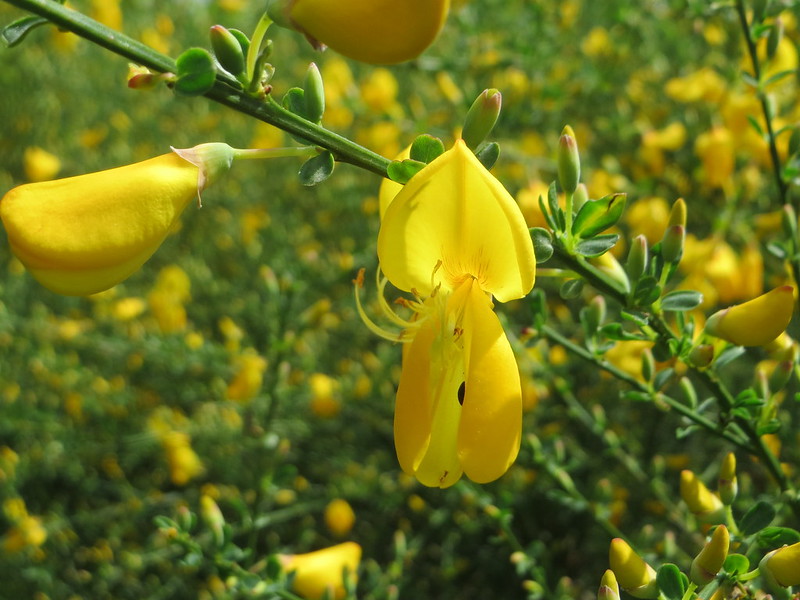
Looking across the valley in June, the flowering Broom bushes provide a splash of yellow in the recently replanted forestry. Broom is a member of the Pea family and has similar yellow flowers to the more commonly seen Gorse or Furze. Broom, however, does not have prickly spines.
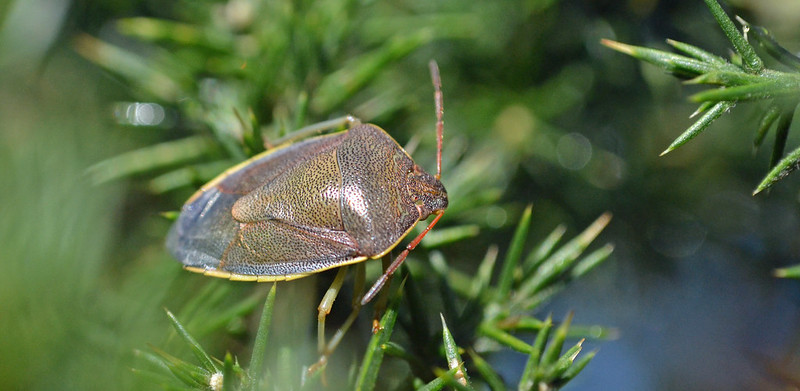
Gorse shieldbug can be seen on the Broom and Gorse bushes. The conifer trees which were previously growing along the stream banks were felled and replaced with native Alder.
This area also has naturally regenerating Willows.
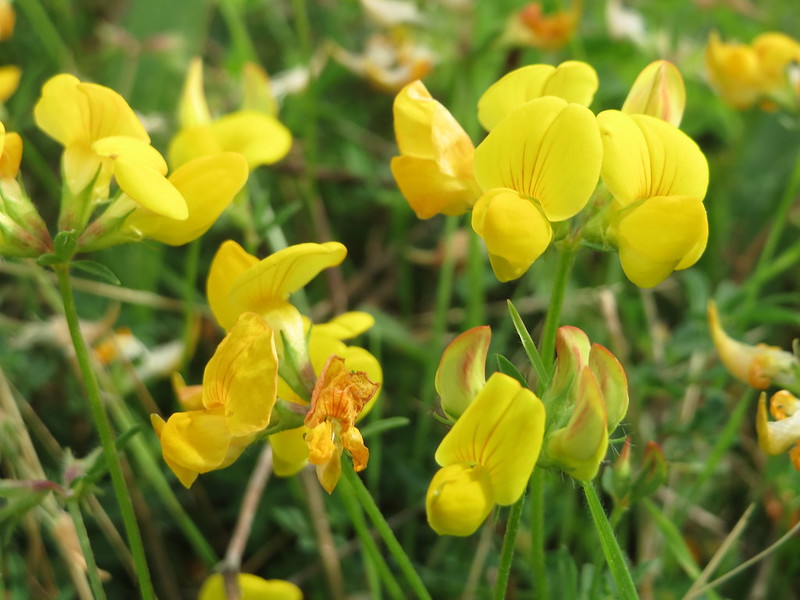
Common bird’s-foot-trefoil and white clover have established themselves on the margins of the gravel track. The former is the food plant of the Common blue butterfly which may be seen visiting these flowers across the summer.
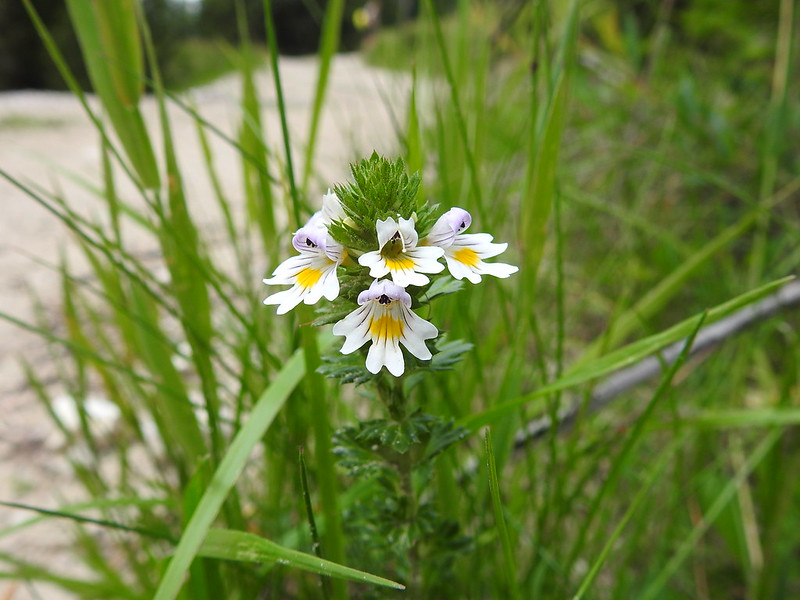
The diminutive but beautiful wildflower ‘Eyebright’ can also be seen along the edge of the track. These partially parasitic plants get some of their nutrients from the roots of the grassland species they grow alongside.
Purple moor grass, a species of acidic habitats such as bogs and heaths, can be seen on the banks of the trail near Stop 5. The leaves of this grass are tinged with a wine colour in summer from where the species gets its name. These leaves turn a beige colour in winter and may have given the townland the name of Moanbaun which means ‘white bog’.